
Meaningful conversations
in the wild.
1-1 psychological support outdoors


My Mission
Moving support out of clinical rooms and into nature.
My goal is to help you feel calmer, capable, and in control.
Client Stories
"Walking took the pressure off, making the sessions feel natural and relaxed. I’ve come away equipped with tools I know I will use my whole life"
"Working with Hannah has significantly boosted my confidence and sense of calm, which others have noticed as well. Her conversational and informal approach made our sessions incredibly effective. Overall, it's been a transformative start to my journey toward a more fulfilling and balanced life"
"Sessions with Hannah have been transformative for me. She really encouraged me to take a step back from myself and look at things slightly differently... it helped me get through more than one tricky period."
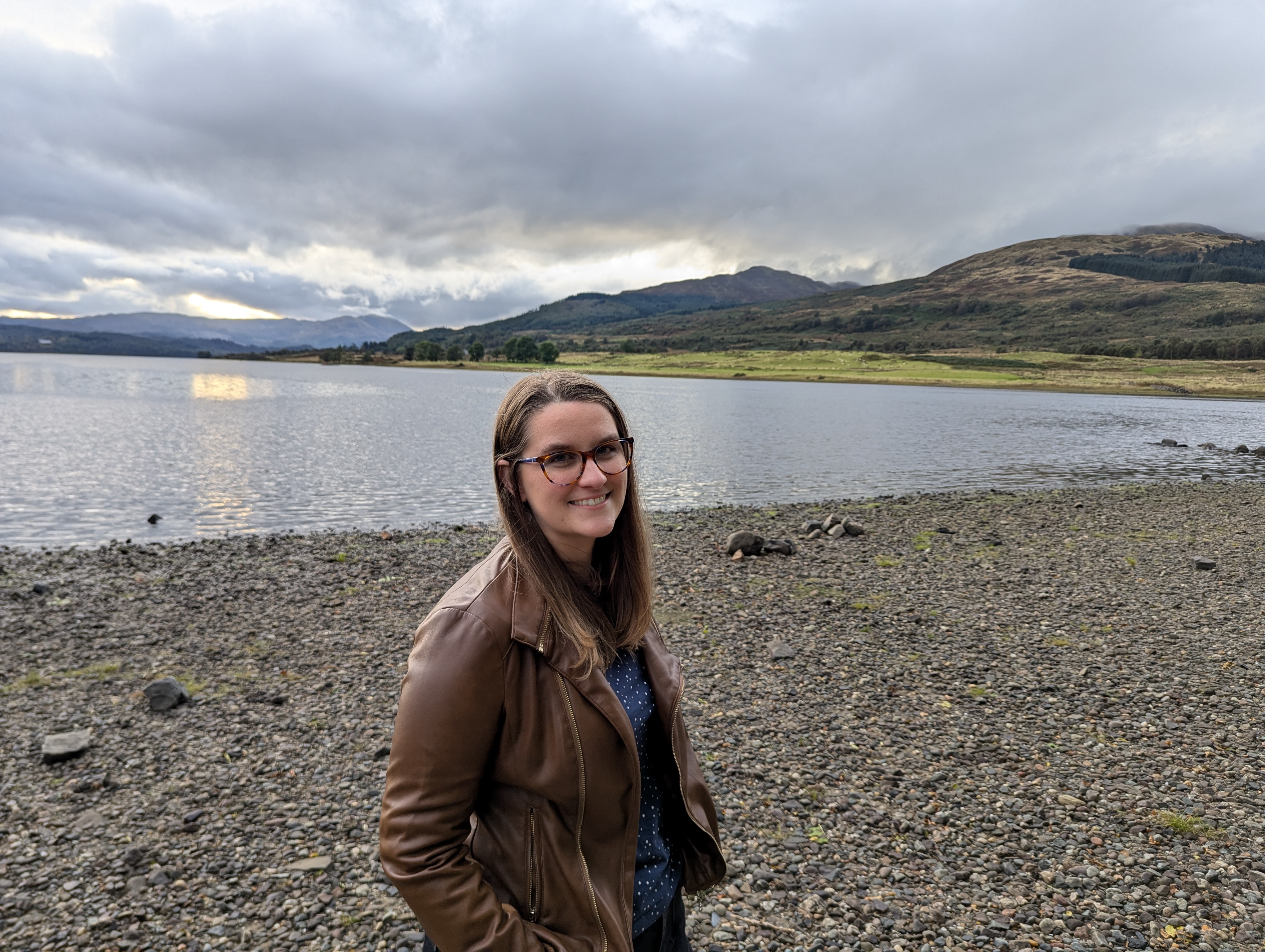
Taking meaningful conversations
into the Wild.
I’m Dr Hannah Prince-Llewellyn, a HCPC Registered Practitioner Psychologist. My background spans mental health, sport and exercise psychology, and organisational settings. I’m also a founding member of the Applied Psychologists in Physical Activity Network and have published research on walk and talk therapy.
My work in outdoor therapy grew from lived experience. A health condition once limited my movement and time outdoors, which made me aware of what I was missing. When I could get outside, even briefly, it provided calm and perspective that nothing else could. That experience led me to research whether nature-based approaches could genuinely support others’ wellbeing. Both the evidence and my clients’ experiences confirm they can.
It also showed me how much we lose when therapy focuses only on the mind. Our bodies are essential to wellbeing, yet traditional therapy often overlooks them. Walking brings the body naturally into the therapeutic process. Many clients find that moving helps them access thoughts and feelings that stay stuck when sitting still.
What I Can Help With
1-1 sessions are customised to your unique needs, here are some examples of things I can help with:
Anxiety
This will be different for everyone. It might be things like racing thoughts, feeling tense, on edge, unable to relax, and it might be getting in the way of you doing some of the things that are important to you.
Perfectionism
This might include things like setting unrealistic expectations for yourself, being overly critical of yourself when you don't meet those standards, and fearing failure or not being good enough.
Stress & Burnout
This might be chronic overwhelm from professional or personal demands that leaves you feeling depleted, empty and like you may never be able to stop.
Imposter Syndrome
This can be experienced as feeling like a fraud despite evidence of your success, and having a constant fear of being 'found out' and not being good enough.
Feeling Stuck
This could be in relation to anything, where you have a sense of stagnation. You know you want to move forward, but you can't seem to find the path.
Low Motivation
This could be coming through as difficulty finding the drive to start tasks, exercise, look after yourself, perhaps feeling flat, or lacking your usual spark and purpose.
Sports or exercise related difficulties
This could be any of the previous, but it may also relate to not being able to perform to the best of your ability because of nerves, doubt, injury or other reasons. Or perhaps you are finding it difficult to engage in exercise consistently.
Services & Pricing
"Freedom to walk, freedom to talk."
Walk & Talk
1-1 psychological support integrated with movement in natural settings. Clients often find the rhythm of walking helps to free their thinking and feel more at ease in sessions. Available in-person or over the phone.
Book free ChatOnline
1-1 sessions with optional nature-based interventions from the comfort of your own space or outdoors. All you need is a stable internet connection and a quiet space.
Book free ChatWorking Together
Taking the first step can feel daunting. Here is what you can expect when you decide to work with me.
Free Chat
We'll talk online for 15 minutes, about what you're looking for and whether working together feels right. No pressure, just a conversation.
First Session
We meet online for 50 minutes to explore your experience and what you want from sessions. If you're interested in outdoor sessions, we'll also discuss practical details like locations and privacy.
Regular Sessions
We work together at a pace that suits you. Sessions can be outdoors, online, or a mix of both depending on your needs and circumstances.
Moving Forward
You'll develop a better understanding of yourself and practical ways to manage the challenges you're facing. What this looks like will be unique to you.
Why nature?
My practice integrates nature into psychological support, whether we’re walking outdoors together, sitting in a natural setting, or bringing nature-based approaches into online sessions.
Nature restores & reconnects
Natural settings provide a restorative environment away from daily demands. Many clients find it easier to reconnect with their own thoughts, feelings, and physical sensations outside of clinical settings.
Mind & body work together
Have you ever noticed that you think better when you move? Walking stimulates thought processes and helps us access emotions that can feel stuck when we're sitting still. Moving our body often unlocks our mind.
Research-informed Practice
My approach is grounded in evidence. My own published research (Prince-Llewellyn & McCarthy, 2024) , alongside other studies, demonstrates that nature-based approaches reduce psychological distress and improve wellbeing. Clients report feeling greater freedom to express themselves, gaining new perspectives, and developing better self-awareness.
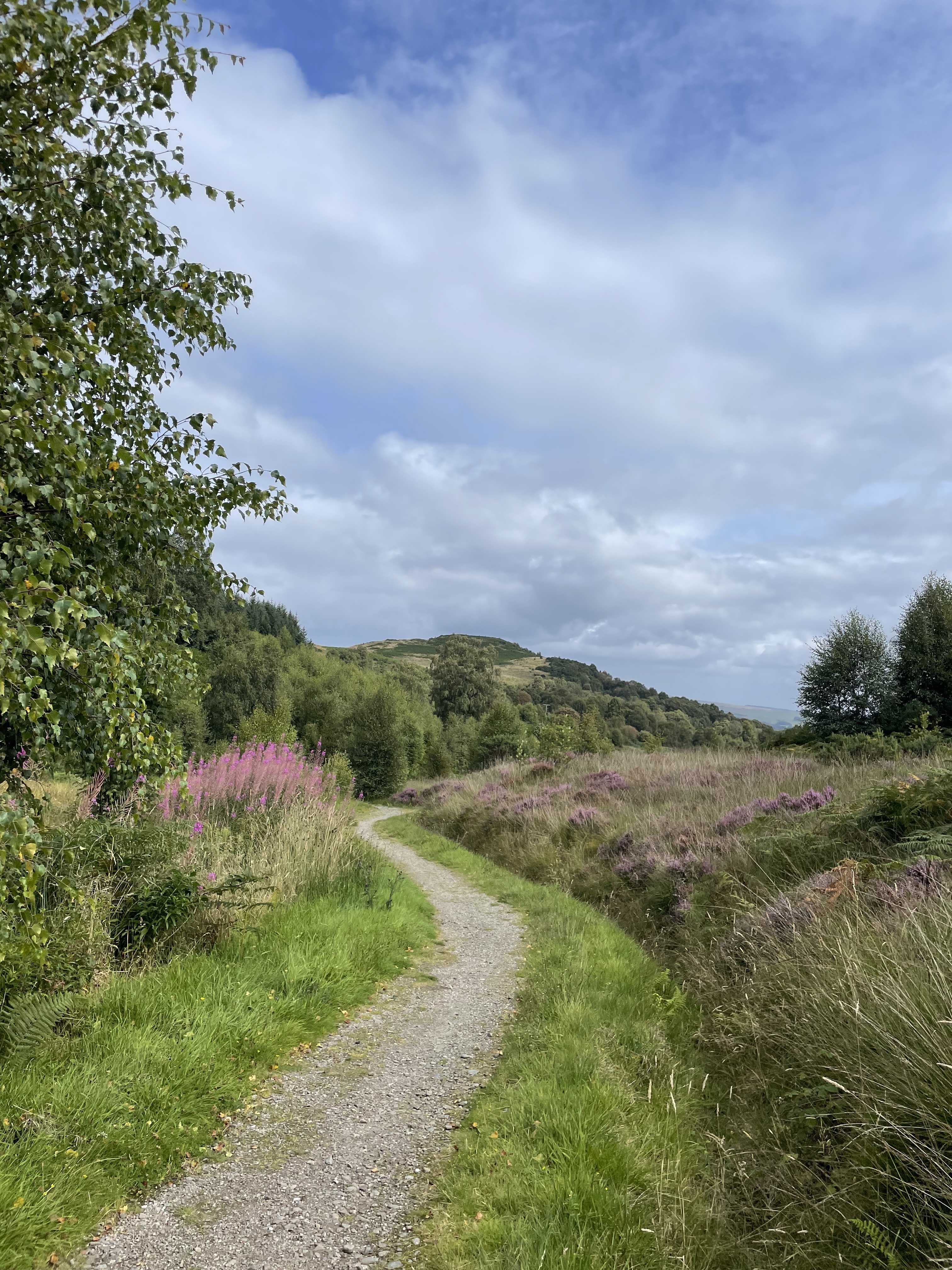
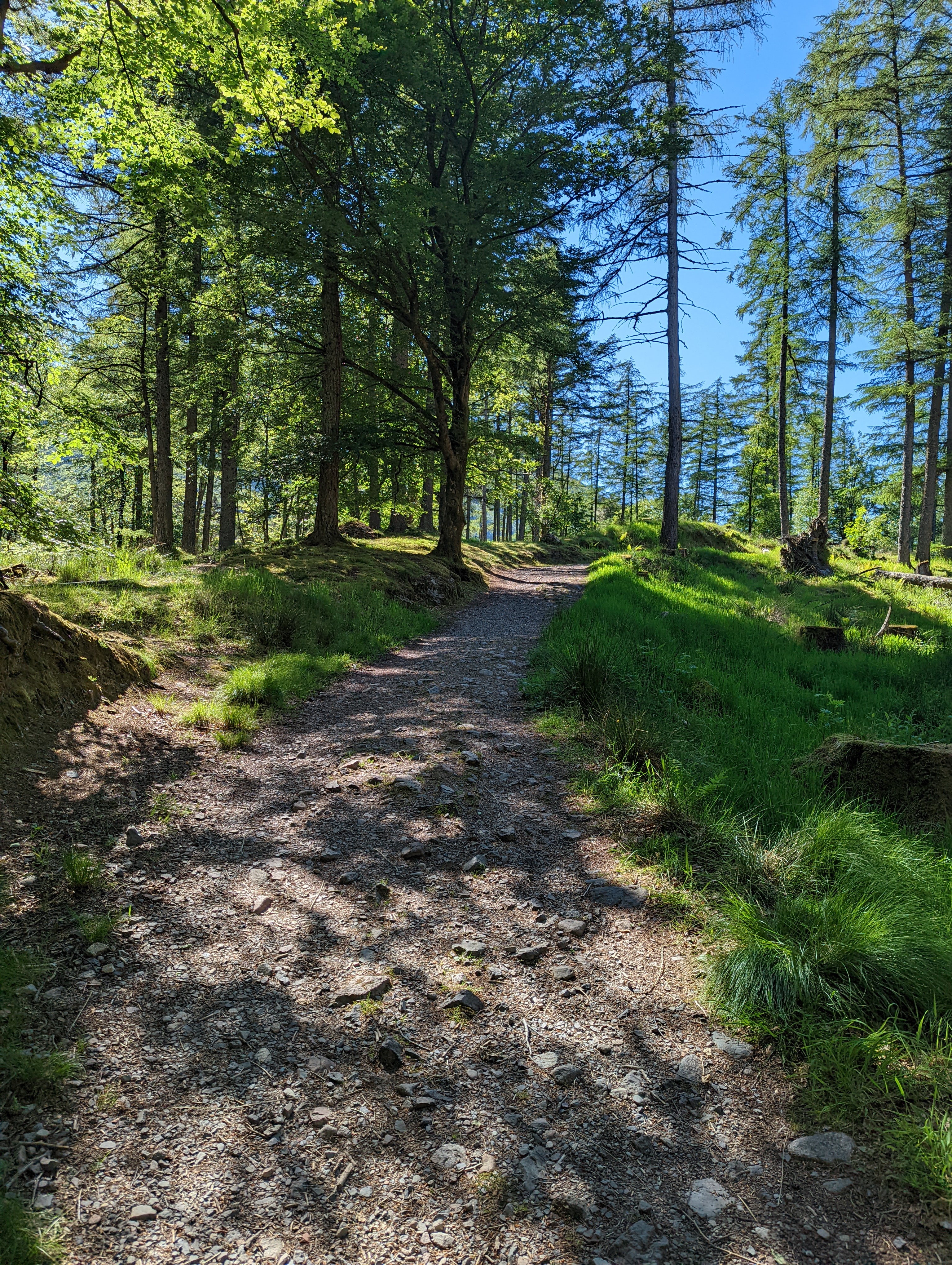
What do I need to prepare?
Outdoor sessions require a little bit of practical preparation. Here is everything you need to know before your first session.
Ask a question about gearScottish Weather Policy
"There is no such thing as bad weather, only unsuitable clothing." Generally, we can walk and talk in rain or sunshine, as long as we can both hear each other and it is comfortable for you. For safety, sessions are moved online or rescheduled during yellow/amber weather warnings (high winds, storms, snow/ice).
Clothing & Footwear
It's best to wear sturdy walking shoes or boots that you don't mind getting muddy,as well as outdoor clothes appropriate for the time of year (usually a waterproof!).
Confidentiality in Public
Before having our first walk and talk session, we meet online to discuss things like how to ensure your privacy is maintained. In general, we tend to avoid busy places, and stick to quiter paths, ensuring that we pause or chose an alternative path if it gets busier.
Where we meet
We’ll choose a location together that fits your needs (like privacy and access).
Stirling & Falkirk
Based near the University, the Ochil Hills and Plean Country Park.
Edinburgh
Urban nature therapy within the city limits.
Glasgow
Accessible parks and nearby lochs.
Online
Accessible therapy from the comfort of your own space.
Loch Lomond the Trossachs
Accesible trails in the Trossachs National parks.
Common Questions
Some common questions I get asked:
What happens if it rains?
We embrace nature in all its forms! I recommend bringing suitable waterproof clothing. However, if the weather is severe or you're uncomfortable, we can switch to an online session or find a sheltered spot.
Is outdoor therapy confidential?
We try to make is as confidential as possible, by choosing locations that are quiet and allow for privacy. If we encounter others, we can pause our conversation or change course. We discuss this in detail during our first session.
Do I need to be physically fit?
Not at all. The pace is entirely up to you. We can sit on a bench, walk slowly, or find a spot to stand. I'll take your lead on pacing, and we'll discuss this in the first session.
Where do the sessions take place?
In most places across central Scotland, these could be urban parks or gardens, or out in the countryside on trails or near lochs. We will agree on a convenient meeting point (like a park entrance or car park) beforehand, and discuss any requirements you might have.
Is this different from 'normal' therapy?
The core therapeutic relationship and psychological principles remain the same. The main difference is the setting, which acts as a 'co-therapist', often helping to ground us and offer new perspectives.
Is there evidence that walk and talk therapy works?
Yes. Research studies have shown that walk and talk therapy can reduce psychological distress and improve wellbeing. Clients in these studies reported that the combination of nature, movement, and therapy helped them gain new perspectives and process their thoughts more effectively. While it's a relatively new area of research, the evidence so far is promising.
Can I use my health insurance?
I'm a recognised provider for Axa, Aviva, and Vitality. To use your insurance, you'll need to: - Contact your insurer to check if you have mental health/wellbeing cover - Obtain an authorization or referral code from them - Provide this at the time of booking Each insurer has different policies about what's covered and how many sessions are included. If you're unsure about any of this, we can talk it through during your free consultation, or you can email me before booking.
Do you offer CBT?
Yes. I am an integrative practitioner, meaning that I don't take a one-size fits all approach. Foundational to the work I do is our relationship,beyond this, I integrate CBT and other approaches where appropriate. These include: compassion focused therapy, acceptance and commitment therapy.